
Selling Waterfront
Timing around the lake season, photographing the water side, and the questions lake buyers always ask.
When is the best time to sell a waterfront home on Lake Tapps?
Buyers respond to the lake when it is full and in use, so many sellers aim to be on the market as the water comes back up in spring and through the summer. Whatever month you list, plan backward from the time the water looks its best, and have the photographs made while it does.
A lake home is really two houses for marketing purposes. There is the street side, which looks like a lot of homes in Bonney Lake or north Pierce County, and there is the water side, which is the reason someone pays for the property. Most of the work of selling well here is about showing that second house clearly and answering the questions it raises before a buyer has to ask.
Plan backward from the water
If you are thinking about selling within the next year, the most useful thing you can do this summer is get the water side photographed properly, while the lake is full, the lawn is green, and the dock is floating. Labeled by season, those photographs can support a listing that goes live in October or February, next to current photographs that show the lake as it is on the day a buyer visits.
Spring listings get the whole season ahead of them. Buyers can picture a summer there because summer is coming. Summer listings show the lake at its busiest, which is a plus for most buyers and a question for a few who value quiet.
Autumn and winter listings draw fewer people, and the ones who come are often more deliberate. The shoreline is exposed, so a well-kept bulkhead and a sound dock are easy to see. If yours are in good shape, low water shows it.
Timelines for any sale vary, and depend partly on what else is for sale around the lake that month. I will not promise a date. I will tell you plainly what I think the calendar means for your particular property.
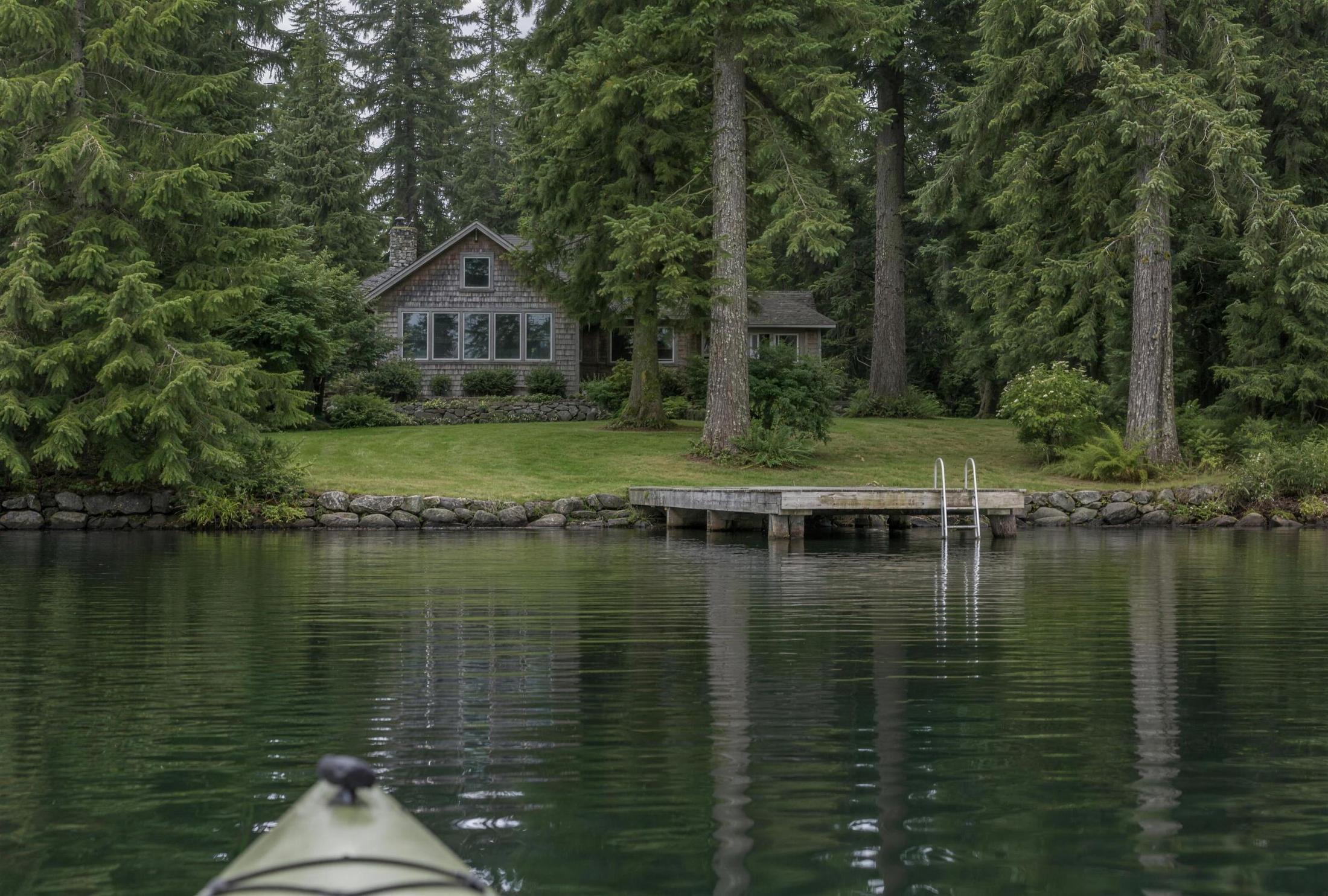
Buyers meet a lake home from the water first. Photograph it from there.
How should you photograph a waterfront home?
Treat the water side as the front of the house. It deserves the best light and the lead photograph.
From the water and the dock
Some of the most useful images are taken looking back at the house from the end of the dock or from a boat just offshore. They show what a buyer will actually see when they come home by water: the house, the lawn, the stairs, and how the property sits against its neighbors. Aerial photographs can help show frontage and orientation. Hire a drone pilot who holds an FAA remote pilot certificate and knows the rules for flying over the lake and near the neighbors.
At the right hour
On most lots, one time of day flatters the water side. It might be early morning when the lake is flat, or dusk when the windows glow and the far shore goes dark. I look at which way the house faces and plan the shoot around it. If shoot day turns grey, I reschedule.
Through the windows
Inside, the view is the subject. Clean glass inside and out, open every blind, and let the photographer balance the exposure so the lake still shows through the glass.
Honestly
Editing should make the photographs look like the day felt. It should not move a neighbor’s dock, change the water level, or add a sunset that was not there. Buyers walk the property eventually, and they remember.

What do buyers ask about docks and water level?
Almost every serious lake buyer asks some version of these. Having the answers and the paperwork ready before the first showing makes a listing feel cared for.
- Is the dock permitted?
- Gather whatever you have: permits, approvals, contractor invoices, and the year it was built or rebuilt. If you do not know, say so, and we can look for records together.
- What happens when the lake drops?
- Tell buyers plainly what your dock and lift do in the off-season, and share low-water photographs if you have them.
- Does the boat lift stay?
- Decide early what conveys: the lift, floats, a swim platform, the kayak rack. Put it in writing so it never becomes a last-week negotiation.
- How deep is it off the dock?
- Share what you know from your own use of it, and be clear that it changes with the season. Avoid guessing at a number.
- Septic or sewer?
- Have the answer confirmed, plus septic records or pump service history if either applies.
- Has the bulkhead been repaired?
- What was done, and when. Receipts help more than recollections.
- Is anything shared with a neighbor?
- Shared docks or access paths, and whether the arrangement is recorded.
Getting the shoreline ready
Start at the water and work up toward the house. Replace loose or split dock boards, clean the decking, and check that floats sit level. Pressure wash the stairs and make every railing solid, because buyers will walk down them. Trim anything that blocks the view from the main living space, and mow and edge right down to the shore.
Put out a few good chairs at the end of the dock or around the fire pit, and take away almost everything else. Store the pool noodles. If your boat is in the lift and clean, leave it. If it is not, move it.
Then deal with the small maintenance items a buyer’s inspector will write down anyway, like gutters, downspouts, and exterior lights on the stairs. If a water-side repair needs a permit, talk to me before you start it, because permit timelines can run past a listing date.
What sellers disclose
Washington sellers of residential property generally complete a seller disclosure statement under RCW 64.06. It asks about things that matter a great deal on the lake, including water, drainage, sewer or septic, and structures on the property. Answer carefully. The form allows a “don’t know” answer, and a guess can cause trouble later. Talk with a real estate attorney if a question gives you pause.
How a lake home is valued
Waterfront should be compared with waterfront, and lake view with lake view. Within waterfront, a lot of things move value: how much shoreline the lot has, which way it faces, how steep the walk to the water is, the condition of the dock and bulkhead, and how the shore behaves at low water. There are fewer waterfront sales than inland ones, so each comparable needs careful reading.
We will talk about price together, and the decision is always yours. I will show you exactly which sales I looked at and why, so you can see the reasoning and question it.
Walk the shoreline with Austin before you list
Before you list, I will walk the shoreline with you and tell you what I would photograph first.
206.940.0942